





What Really Separates Open-Ear Headphones Today: Sound Technology and Brand Differences
The world of personal audio is witnessing a significant shift. As awareness of hearing health and situational awareness grows, open-ear headphones have surged from a niche product to a mainstream category. Unlike traditional earbuds that seal the ear canal, or over-ear headphones that cup it entirely, open-ear designs allow ambient sound to pass through naturally. This fundamental difference has sparked a wave of innovation, leading to a diverse market where the distinctions between products are no longer just about fit, but about deeply integrated sound technology and distinct brand philosophies. This article will dissect the core elements that separate the best from the rest, focusing on acoustic engineering and meaningful brand comparison.
The Acoustic Engineering Behind Modern Open-Ear Headphones
Creating compelling audio with an open design is an acoustic challenge. Brands are deploying sophisticated technologies to overcome the inherent limitations of not having a sealed chamber.
Driver Innovation: Beyond the Single Unit
At the heart of any headphone is its driver. For open-ear headphones, driver technology is paramount to deliver clarity and bass response without physical isolation. A significant advancement in this area is the dual-diaphragm driver. This design utilizes two diaphragms working in tandem—often a rigid titanium diaphragm for precise high frequencies and a flexible composite diaphragm for richer mids and lows. This setup compensates for bass loss in an open environment, providing a more balanced and powerful sound profile than traditional single-diaphragm units can achieve in this form factor.
Intelligent Sound Processing: The Role of Adaptive EQ
Raw driver capability is only part of the story. Intelligent software plays an equally crucial role. Adaptive EQ technology is a game-changer. Using built-in microphones or wear-detection sensors, the earbuds analyze how they are sitting on your ears and the acoustic environment in real-time. They then automatically adjust the equalization to deliver the optimal sound signature for that specific moment. This ensures consistency—whether you're jogging, have slightly adjusted the fit, or are in a windy park—your music always sounds as the audio engineers intended.
High-Resolution Wireless: Embracing LDAC Audio
For audiophiles drawn to the open-ear concept, audio codec support is critical. While most Bluetooth devices use codecs like SBC or AAC, the integration of LDAC audio technology is a major differentiator. Developed by Sony, LDAC transmits up to three times more data than standard SBC, allowing for high-resolution audio streaming over Bluetooth. For open-ear headphones, this means the subtle details and texture in music are preserved, making the listening experience more immersive and faithful to the original recording, even without noise isolation.
Decoding the Open-Ear Headphones Brand Landscape: More Than Just Marketing
When comparing brands, it's essential to look past surface-level features and understand their core technological investments and design ethos.
- The Tech-First Approach:Some brands prioritize cutting-edge proprietary sound architectures. They often highlight specific driver materials (like graphene-coated diaphragms), custom amplifier chips, and advanced digital signal processing algorithms. Their brand comparison points revolve around lab-measured performance metrics and unique acoustic patents.
- The Holistic Experience Approach:Other brands focus on seamless ecosystem integration, exceptional comfort for all-day wear, and intuitive user interaction. Their technology, like adaptive EQ, is often geared towards effortless personalization rather than raw power. They might excel in companion app functionality, offering extensive sound customization and fitness tracking features tailored for the active user.
- The Hybrid Innovators:A growing segment of brands is blurring the lines entirely by offering versatile products that combine open-ear benefits with traditional features. This leads us to a fascinating product category that exemplifies this convergence.
The Convergence of Worlds: Adaptive Hybrid Open-Ear Headphones and ANC Open Earbuds
The latest evolution in this space is the advent of adaptive hybrid models. These are not purely open-ear headphones nor purely sealed earbuds; they are intelligent devices that can switch between both paradigms. This represents a significant technological leap, addressing the primary user dilemma: the need for environmental awareness versus the desire for immersive focus.
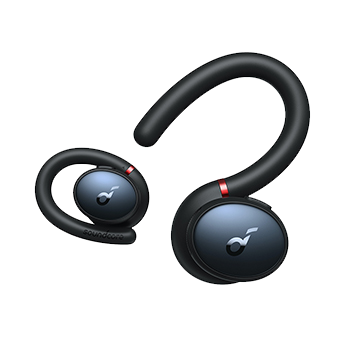
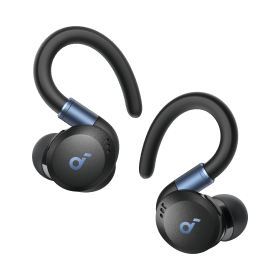
A prime example of this innovation is the soundcore Aerofit 2 Pro. This product embodies the technological and philosophical convergence discussed above. It doesn't force a choice but adapts to the user's scenario.
Product Spotlight: soundcore Aerofit 2 Pro – The Adaptive All-Rounder
The soundcore Aerofit 2 Pro is engineered for those who refuse to compromise. Its key selling point is the ability to seamlessly morph between a true open-ear design and an effective noise-canceling earbud.
- Dual-Form Functionality: In its Open-Ear Form, the non-intrusive design ensures zero ear canal contact, promoting breathability and all-day comfort while keeping you connected to your surroundings. When you need to focus, the ANC Form engages adaptive active noise cancellation to significantly reduce ambient noise in busy environments like subways or offices.
- Intelligent Core Technologies: The device leverages several of the advanced technologies that separate modern open-ear headphones:
- New Open Acoustic Design: It features an ear-cavity-fitting structure with an 11.8mm custom composite diaphragm, tackling the bass challenge inherent to open designs.
- Adaptive EQ: In ANC mode, it automatically adjusts the equalization based on your ear's fit and the wearing condition, ensuring optimized sound quality every time.
- High-Resolution Support: It is equipped to deliver superior detail by supporting LDAC audio, providing a wireless hi-res listening experience.
- Adaptive ANC: The noise-canceling mode uses an ultra-wideband system to intelligently filter out distractions, ensuring clarity when you need it most.
- User-Centric Design: Comfort is addressed with a 5-gear, 56-degree adjustable Ear Hook 2.0 system designed to fit a wide range of ear shapes securely. Interaction is simplified—the earbuds can auto-detect which form they are in and smart-match the sound profile and volume accordingly.
For users seeking a dedicated open-ear experience for sports or outdoor activities, exploring a full range of Open Ear Earbuds can provide more specialized options. Conversely, for those whose priority is maximum noise isolation in a traditional form factor, ANC Open Earbuds represent the pinnacle of that technology.

Making an Informed Choice: How to Choose the Best Open-Ear Headphones
When navigating the open-ear headphones market, let your lifestyle dictate your priorities.
- For the Active Commuter & Fitness Enthusiast:Prioritize secure fit (look for adjustable hooks or neckbands), sweat resistance (IP ratings), and clear call quality with wind-noise reduction. A model with a balanced sound profile that doesn't overpower ambient sounds is key for safety.
- For the Office Worker & Digital Nomad:Focus on all-day comfort, multipoint connectivity for switching between devices, and moderate ambient sound passthrough for colleague awareness. Hybrid models with a quick-toggle ANC feature are exceptionally valuable here.
- For the Audiophile & Tech Adopter:Scrutinize the driver technology (dual-diaphragm designs), codec support (LDAC audio, aptX Adaptive), and the sophistication of the companion app for sound customization. Adaptive EQ is a must-have for consistent audio fidelity.
Conclusion: The Future of Open-Ear Headphones and Adaptive Audio
The landscape of open-ear headphones is defined by much more than just the absence of an ear tip. The true separators are the advanced acoustic technologies—like sophisticated dual-diaphragm drivers and intelligent adaptive EQ—that make high-fidelity audio possible in an open environment, and the brand comparison that reveals whether a company prioritizes raw sonic performance, holistic user comfort, or adaptive versatility. As exemplified by innovative products like the soundcore Aerofit 2 Pro, the future lies in flexible, intelligent audio solutions that adapt to our dynamic lives, providing both a connection to our world and an escape into our music, on our own terms.
Frequently Asked Questions (FAQs)
Can open-ear headphones provide good bass quality without sealing the ear?
Yes, modern open-ear headphones have made significant strides in bass response. Brands use technologies like larger, custom-tuned drivers (such as 11.8mm or 14mm diaphragms), dual-diaphragm designs, and bass-enhancing algorithms or physical bass tubes to direct low-frequency waves toward the ear. While the bass may feel different—more spacious and less "punchy in your head" than sealed earbuds—it can be full and well-defined.
How does adaptive EQ work, and why is it important for open-ear models?
Adaptive EQ uses internal microphones to analyze the sound output reaching your ear canal in real-time. It compares this to a target response curve and automatically adjusts the frequency output to correct for variances caused by fit, movement, or the unique shape of your ear. This is especially crucial for open-ear headphones because their sound signature is more susceptible to changes in positioning and external noise interference, ensuring you get a consistent and optimal listening experience every time.
Is LDAC audio support worth it for Bluetooth headphones, and do I need special content to use it?
LDAC audio is worth it if you listen to high-resolution audio files (e.g., from Qobuz, Tidal, or your own FLAC library) and want the best possible wireless sound quality. It transmits more data, preserving finer details. You do not need "special" content, but you will benefit most from high-bitrate sources. Your audio source device (phone, DAP) must also support LDAC. Note that enabling LDAC can slightly reduce battery life and may affect connection stability in very congested wireless environments compared to more stable codecs like AAC.


